Sea freight shipping
Whether you need a full container load (FCL), less than container load (LCL) or general cargo, you can find the right transport solution for your sea freight on our platform.
Business customers just have to submit a request and receive a cost-effective quote from a ocean freight forwarder at short notice. We secure your supply chain across all continents. Our customer service team will also assist you with any questions you may have about container shipping and shipping documentation.
ATTENTION: Due to the current situation in the Red Sea, longer transit times (between 3-6 weeks) and higher freight rates are expected.
Want to compare sea freight transport offers? We’ll do it for you.
The biggest challenges for companies when booking sea freight are obtaining quotes from different sea freight forwarders and the often cumbersome and time-consuming booking process in different systems. In addition, there are varying rates depending on the season, shipping routes and the goods you want to ship, which you first have to compare.
We compare freight forwarders, you save – your advantages with LetMeShip
With LetMeShip, all you need to do is submit a single enquiry, which we use to reach a large number of freight forwarders for container transport. We then send you the most affordable quote. This service is free of charge for you and is an integral part of our service for B2B customers. If you are happy with the quote, we commission the freight forwarder on your behalf and take care of the entire process.
How can I book sea freight via LetMeShip?
With a free customer account, you can easily request a sea freight quote with no obligation. Simply register and log in to the ‘Shipping’ section to submit a shipping request via the ‘Special’ tab. Once we receive your request, we will get back to you promptly with a customised quote including costs and time frame. New customers can simply use the contact form.
Ocean freight services: More flexibility for special shipments
Sea freight transport offers companies more flexibility and is less restrictive than other modes of transport in terms of the goods that can be transported. Goods that pose a threat to public health, are flammable or contain toxic, corrosive, magnetic or biochemical substances are also transported by sea to secure the supply chains of manufacturing companies.
How long does sea freight shipping take?
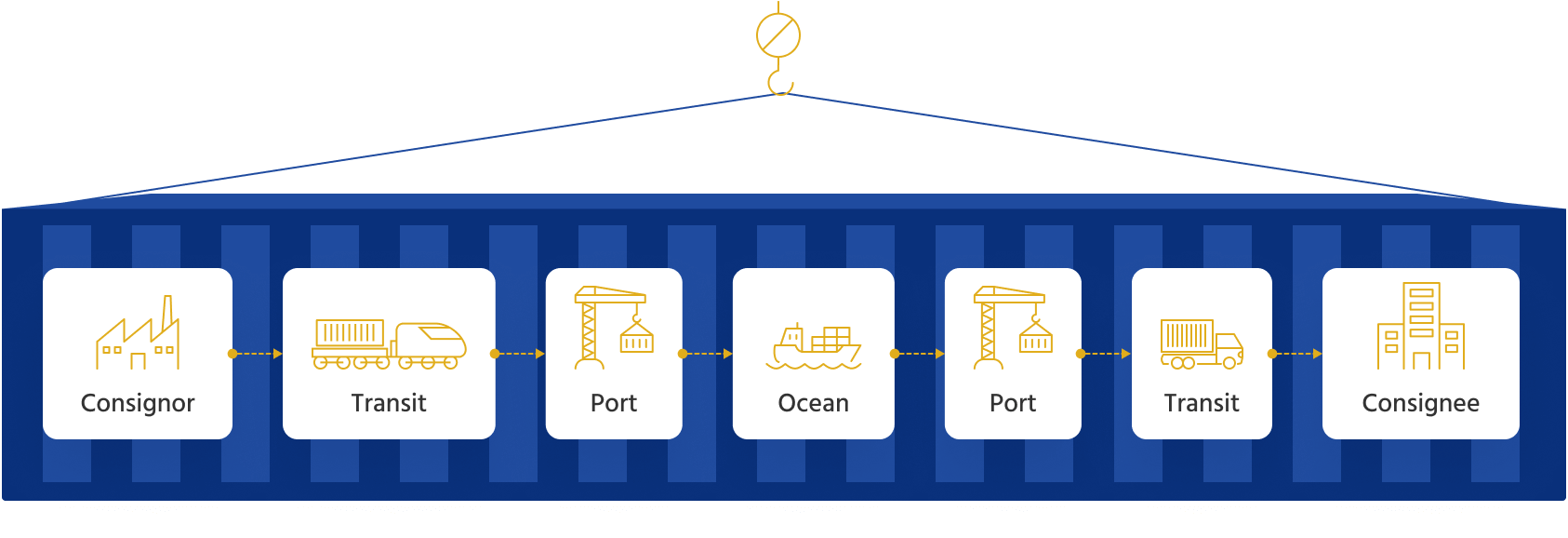
Sea freight takes an average of 18–20 days, including handling, but can sometimes take up to 60 days. The time frame for ocean freight shipments is much longer than for other modes of transport. Once the cargo arrives at the port of destination, it takes some time, usually a few days, for the cargo (container) to be unloaded from the ship, unloaded in the port and then transported to the hinterland. The illustration shows a maritime supply chain:
Sea freight is one of the most cost-effective solution to transport large shipments over long distances from a distant destination country, but you should allow more time for the journey. Around 80 per cent of the world’s trade is transported by sea. If you have goods that need to be shipped from overseas and are not time-critical, we therefore recommend that you booking a freight forwarder for ocean freight. This is particularly suitable for shipping large and heavy products (over 500kg) or large volumes. Large quantities of smaller shipments are often combined in one container to make shipping as cost-effective as possible and to maintain transport chains around the world.
Alternative(s) to sea freight shipping for imports from the USA and Asia
Sea freight services are often used to transport goods from Asia to warehouses or factories in Europe or North America and vice versa. A faster alternative here can be shipping by air freight, but this also involves higher costs, especially for heavy, bulky goods.
FAQ
Questions and answers about sea freight shipping
Sea freight container prices: How are the costs calculated?
Sea freight costs are calculated on the basis of the size and weight of the goods. There are also charges for customs clearance, port, transport, security, unloading and, where applicable, demurrage. Most sea freight is transported in metal containers on container ships. Some of these goods require special containers. Chemicals and large equipment that do not fit into containers are often carried on cargo ships.
What does fcl shipping mean?
A basic distinction is made between the transport of bulk goods and box freight. Goods that take up more than 15 cubic metres of space can be transported using a full container load (FLC). For freight of 1.5 to 15 cubic metres, a less than container load (LCL) is sufficient. Special refrigerated boxes are also available for shipping perishable goods.
Why should I book ocean freight with LetMeShip?
We specialise in business-to-business shipping and understand our customers’ transportation needs. Our multi-carrier platform was designed specifically for B2B shipping, allowing you to book almost any transport mode and all major carriers directly. What makes us unique and of great value to you is our personally accessible customer service team, which you can reach during business hours without chatbots or long waiting times.
Feel free to contact us if you have other shipments or are not sure if ocean freight is the right choice for you.
Which sea freight documents do I need?
As with any shipment, incorrect or delayed documents can prevent your goods from being loaded onto a ship. This in turn will result in your shipment being delayed and you may incur huge charges for standing, demurrage and detention times in the harbours.
Document management for import and export Ensure that the following documents are completed correctly and submitted in good time:
- Pro forma Invoice or Commercial Invoice
- Bill of Lading (B/L)
- Sea waybill
- Certificate of Origin
- Dangerous goods certificate (if required)
Export customs documents will be issued by the carrier you have booked. If you booked through LetMeShip, the cost of this is included in the freight cost.
How do I pack my sea freight?
There are many special features to consider when it comes to export packaging, especially when exporting to third countries. Packaging for sea transport must not only be stable, but also comply with regulations such as the IPPC standard of the International Plant Protection Convention. This agreement primarily relates to agreements on wooden packaging materials for compliance with shipping quarantine requirements. Compliance with these standards is verified by the IPPC stamp.
To avoid damage to your shipment during transport by sea, you need to make sure you use the right cardboard packaging. Export packaging materials and loading platforms such as pallets, containers and crates are made from solid wood to ensure stability. Special climate-controlled packaging is used to transport goods across different climates. These are generally durable and protect the item from damage, such as corrosion, to ensure your goods arrive undamaged at their final destination.

Hi, I’m Eike 👋
I’m in the LetMeShip Sales team and ready to get the best rates and shipping options for you.
Let’s talk – We’re Here to Help!
Get a call back or book an appointment at your convenience.
26 years
of logistics expertise paired with dedicated customer service.
3 million
consignments sent over our shipping platform every year.
90 seconds
the time it takes you from login to retrieving your shipping label.
Our Strengths
Shipping options available at LetMeShip
Book your first shipment now!