Import duties in Australia: What’s changing for importers and exporters.

Mar 26, 2026
7 min.
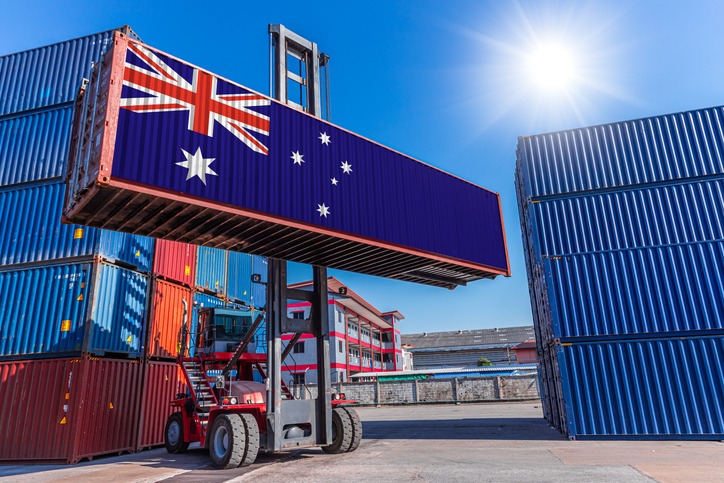
Trade with Australia is becoming easier – and more attractive. But what does this mean in practical terms for sending a parcel to Australia and the duties incurred?
The new free trade agreement opens up new opportunities for importers and exporters: lower costs, simplified processes and greater planning certainty in international shipping. What costs are involved in shipping and who is responsible for them? Who bears the costs for imports and exports? You can find all the answers here.
What exactly is changing for exporters and importers?
The most significant benefit of the agreement is the removal of customs barriers. This is expected to save European companies around 1 billion euros per year in import duties. The anticipated growth in exports from the EU to Australia could reach up to 33% over the next ten years.
Below you can see at a glance the key benefits and the sectors that stand to gain the most:
Exports to Australia
| What is changing? (Australian import duties) | Advantages/benefits for exporters | Key export product groups |
|---|---|---|
| Australian import duties to be eliminated in the long term | Lower overall costs when shipping to Australia | Machinery & equipment |
| Simplified customs clearance for exports to Australia | Faster delivery times for international shipments | Automotive parts |
| Clear rules of origin for goods shipments | Fewer errors and delays at customs | Electronics |
| Removal of trade barriers in EU-Australia trade | Better market access for businesses | Chemical products |
| Competitive advantages through free trade agreements | Greater sales opportunities in the export business | Industrial goods |
For dairy products, export growth of up to 33% is expected.
Imports into the EU
| What is changing? (Import duties Australia/EU) | Advantages/benefits for importers | Key product groups for imports |
|---|---|---|
| Reduced or eliminated import duties from Australia | Lower purchase costs in international trade | Raw materials (e.g. lithium, aluminium, manganese) |
| Simplified import processes into the EU | Faster customs clearance for imports | agricultural products (e.g. beef, sheep and goat meat, wine, fruit and seafood) |
| Fewer regulatory hurdles in goods imports | More stable and efficient supply chains | Food |
| Improved trading conditions through the agreement | Greater planning certainty for importers | Specialised goods |
| Greater EU–Australia market integration | Diversification of procurement | Energy and raw material |
Would you like to know how much it costs to send a parcel to Australia? Use our free shipping calculator and send directly to Australia.
What is the EU–Australia Free Trade Agreement?
After eight years of negotiations, the EU and Australia have reached an agreement to remove trade barriers and strengthen economic cooperation. According to the European Commission, this agreement is part of a broader strategy to diversify European trade routes.
The EU and Australia trade goods and services worth over €89 billion annually. This agreement makes cross-border trade significantly cheaper and more efficient for exporters and importers. It provides for the almost complete removal of customs duties on goods.
What do you need to bear in mind as a B2B shipper?
EU, which means your logistics documentation must be complete and correct.
- Customs documents remain mandatory: You need a correct commercial invoice for every shipment.
- The correct HS code is crucial: As import duties vary depending on the product category, an incorrect code can lead to delays or additional costs.
- Strict Australian import regulations: Australia has very strict biosecurity regulations. Meat, dairy products, plants and soil are often prohibited or require special permits.
- Incoterms (DDP vs. DAP): These determine who bears the costs. With ‘Delivered Duty Paid’ (DDP), you cover the costs; with ‘Delivered At Place’ (DAP), the recipient does.
How LetMeShip optimises your shipping to Australia
Whether you’re sending a small parcel or exporting heavy freight on a weekly basis – we make the shipping process seamless:
- Compare and save: Calculate the cost of parcel shipping to Australia directly with leading carriers such as FedEx, DHL, UPS and DPD.
- Automated customs documentation: Our platform automatically generates the correct customs invoices based on your booking. As soon as the trade agreement officially comes into force, we will automatically add the necessary treaty texts to your invoice to enable tariff reductions.
- Personalised B2B support: No chatbots – our logistics specialists assist you with complex export queries via chat or telephone.
Conclusion:
The EU–Australia Free Trade Agreement is a strategic game-changer for B2B shipping.
In a nutshell:
- Lower tariffs → lower shipping costs
- Faster customs clearance → better delivery times
- More trade → higher shipping volumes
- More stable supply chains → lower risk
For LetMeShip customers, this means:
- more efficient international shipping processes
- better scalability in business with Australia
- competitive advantages in global trade

Hi, I’m Eike 👋
I’m in the LetMeShip Sales team and ready to get the best rates and shipping options for you.
Let’s talk – We’re Here to Help!
Get a call back or book an appointment at your convenience.
FAQ
FAQ: Import duties Australia & shipping
When will the free trade agreement come into force?
An exact date for its entry into force has not yet been announced. The agreement was signed in March 2026 but still needs to be ratified by the European Parliament and Australia. Until then, the current import duties and customs regulations will remain in force.
How much is the import duty from Australia to the EU?
The import duty depends on the type of goods (HS code) and the value of the goods. In addition, import VAT is usually payable.
Are there any customs duties when shipping to Australia?
Yes. When exporting to Australia, import duties may be payable in the destination country, and these vary depending on the product.
How much does it cost for a business to send a parcel to Australia?
The cost depends on the weight, size, shipping method and provider. B2B shippers can compare prices for free via our shipping platform and book their shipment to Australia directly.
What taxes apply when importing from Australia?
In addition to import duties, import VAT applies in the EU. In Australia, GST (Goods and Services Tax) may also be charged.
What changes will the EU–Australia Free Trade Agreement bring?
Tariffs will be reduced or eliminated in the long term, and customs procedures will be simplified. This will reduce costs and speed up shipping.
Which Incoterms are best suited for shipping to Australia?
For B2B shipping, DDP (shipper pays all costs) and DAP (recipient pays import costs) are the most common.
Which goods are prohibited from being shipped to Australia?
Items such as food, plants, animal products and soil are prohibited or restricted due to strict biosecurity regulations.
How can I calculate the shipping costs for a shipment to Australia?
Register for free on our shipping platform. Enter your key details, compare the prices and transit times of the individual carriers, and book directly.
How can I make shipping to Australia cheaper?
By comparing shipping providers, optimising packaging and ensuring customs documents are correct, you can reduce costs.
How does customs clearance work when exporting to Australia?
You will need a Commercial Invoice, accurate details of the goods and the correct HS code. Clearance is usually handled digitally via the shipping provider.
How do B2B companies benefit from trade with Australia?
Companies benefit from lower tariffs, new markets and more stable supply chains thanks to the free trade agreement.
How long does it take for a parcel to be delivered to Australia for businesses?
Depending on the delivery method, delivery usually takes 2 to 7 working days.
Who is responsible for customs duties and taxes when shipping internationally to Australia?
This is governed by the Incoterms – either the sender (DDP) or the recipient (DAP).
What role does the HS code play in Australian import duties?
The HS code determines the customs duties and is crucial for correct customs clearance and cost calculation.
As a business, can I send parcels to Australia on a regular basis?
Yes, with shipping platforms such as LetMeShip, recurring B2B shipments can be efficiently organised and automated.
Please contact us for discounts.
What are the benefits of a shipping platform for shipments to Australia?
The multi-carrier shipping platform enables price comparisons, automated customs clearance and centralised management of all shipments to Australia.