The EU Carbon Border Adjustment Mechanism (CBAM) from 2027: Threshold, Certificates and Deadlines

Oct 2, 2023
9 min.
Under the EU’s Carbon Border Adjustment Mechanism (CBAM), companies pay for the emissions released when certain imported goods are produced. The definitive regime has applied since 1 January 2026. From 1 February 2027, the first CBAM certificates go on sale. We explain who is affected, what a certificate costs and what this means for imports of goods into the EU and for suppliers outside the EU.
As part of the Green Deal, the European Union introduced CBAM with Regulation (EU) 2023/956 of 10 May 2023. In October 2025, the EU simplified the rules considerably with Regulation (EU) 2025/2083. The most important change: the former value limit of €150 has been replaced by a threshold of 50 tonnes per year.1
What does CBAM mean for importers?
CBAM requires importers of certain goods to buy and surrender CBAM certificates to cover the emissions released during production. This applies to companies that import more than 50 tonnes of CBAM goods into the EU in a calendar year.2
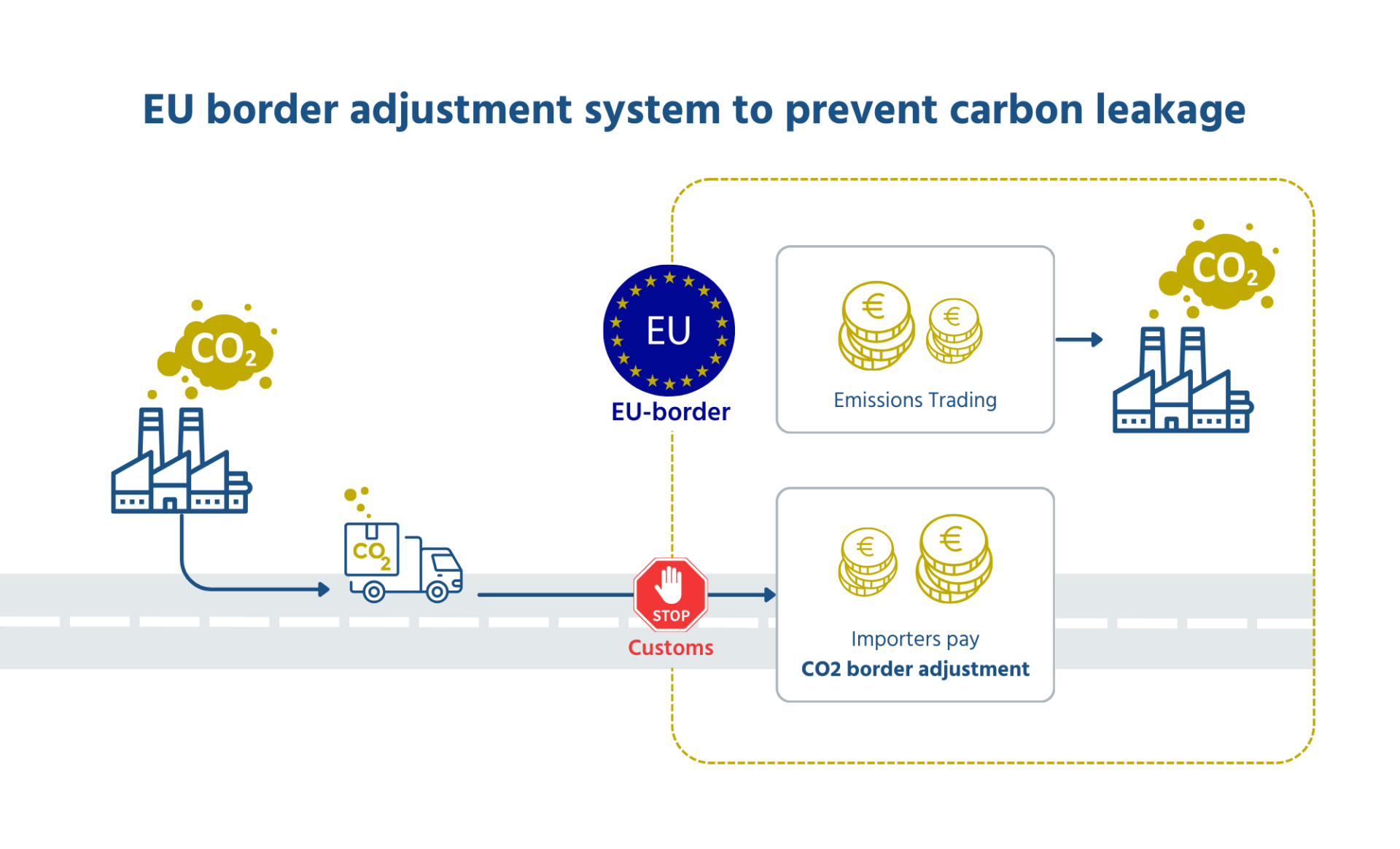
On the one hand, CBAM is intended to prevent companies from moving production, and with it their CO2 emissions, to countries with lower environmental and climate standards. This is known as carbon leakage. On the other hand, CBAM complements the existing EU Emissions Trading System (EU ETS): imports from third countries should bear the same carbon price as goods produced in the EU. CBAM is also meant to encourage cleaner production methods in third countries.
On the one hand, the introduction of the CO2 border adjustment is intended to prevent companies from relocating their production and thus their CO2 emissions to countries with lower environmental and climate standards; this is referred to as carbon leakage. On the other hand, the CBAM – a supplement to the already existing EU Emissions Trading Scheme (EU ETS) – is intended to ensure that imports from third countries are subject to the same emission prices as goods produced within the EU. The CBAM is also intended to promote more environmentally friendly production methods in third countries.
The effects of the Carbon Border Adjustment Mechanism:3
- Importing these goods becomes more expensive because CO2 costs are priced in.
- Potential additional revenue from carbon pricing on imports is to be invested in climate protection.
- Other countries have an incentive to introduce their own carbon pricing so they can continue to trade freely with the EU.
Who is subject to CBAM?
Since 1 January 2026, a mass-based threshold has applied: importers that bring in no more than 50 tonnes of CBAM goods in total per calendar year are exempt from CBAM obligations. The mass of all CBAM goods from the iron and steel, aluminium, cement and fertiliser sectors is added together. The €150 limit per consignment from the transitional period no longer applies.4
Three points matter:
- Electricity and hydrogen are not covered by the threshold. Importers of these goods are subject to CBAM from the first unit.
- Anyone who will import more than 50 tonnes needs the status of “authorised CBAM declarant” beforehand. Without this authorisation, the goods cannot be imported.
- The application is made to the national competent authority of the EU member state in which the importer is established. In Germany this is the German Emissions Trading Authority (DEHSt), in Austria the Office for National Emission Allowance Trading (AnEH).
What does the 50-tonne threshold mean for your shipments?
For many small and medium-sized importers, the threshold is a relief. A company that occasionally receives samples or spare parts made of steel by parcel or pallet will usually stay well below 50 tonnes a year. Even so, it pays to take a closer look:
- The threshold applies per year, not per shipment. Many small imports add up. Track the net mass of all CBAM goods across the whole calendar year.
- Everyday parts count too. Screws, nuts and bolts made of iron or steel (HS heading 7318) are CBAM goods, as are many tubes, profiles and sheets made of steel or aluminium.
- The HS code decides. Whether a product is covered depends on its tariff classification. Our HS Code Finder helps you find the right code. Binding Tariff Information gives you legal certainty.
- The country of origin matters. Emissions data comes from the manufacturer. If you are importing from China, for example, ask your suppliers for emissions data at an early stage.
If you are getting close to 50 tonnes, apply for authorisation in good time. Otherwise you will not be able to import any more CBAM goods once you exceed the threshold. General information on importing is available in our customs guide.
What does CBAM mean for suppliers outside the EU?
CBAM obligations lie with the importer in the EU, or with an indirect customs representative acting on their behalf. Manufacturers and exporters outside the EU do not buy certificates themselves. They are still affected:
- EU customers will ask you for emissions data for your products. Without verified actual values, default values are used.
- If a carbon price has already been paid in the country of production and this can be proven, it reduces the number of certificates your customer has to surrender.
- The European Commission provides separate guidance for operators in third countries.
Which goods are covered by CBAM?
CBAM applies to goods with a high risk of carbon leakage: aluminium, iron and steel, fertilisers, electricity, hydrogen and cement. It covers both the greenhouse gas emissions released directly during production and indirect emissions, for example from the electricity used in production. Besides raw materials, certain precursors and some downstream products are also covered. An extension to further goods that are subject to the EU Emissions Trading System is possible.
Products / HS codes covered by CBAM
| Aluminium | Iron and Steel | Cement | Electricity | Fertiliser | Hydrogen |
|---|---|---|---|---|---|
| 7601, 7603-7608, 76090000, 7610, 76110000, 7612, 76130000, 7614, 7616 | 26011200, 7201, 7202 11-19, 7203, 7202 60, 7205-7229, 7301, 7302, 730300, 7304-7311, 7318, 7326 | 25231000, 25070080, 25232100, 25232900, 25233000, 25239000 | 27160000 | 28080000, 2814, 28342100, 3102, 3105 | 28041000 |
The following are exempt from CBAM obligations:
- Importers below the threshold that bring in no more than 50 tonnes of CBAM goods in total per calendar year (does not apply to electricity and hydrogen)
- Re-imports of goods originating in the EU
- Imports of goods originating in Iceland, Liechtenstein, Norway or Switzerland
- Goods from Büsingen, Heligoland, Livigno, Ceuta and Melilla
What are embedded emissions?
In Art. 3 of Regulation (EU) 2023/956, the EU defines “embedded emissions” as the sum of the direct emissions released during the production of goods and the indirect emissions from generating the electricity consumed in the process. If no exact values are available, importers may use EU default values.
Which rules apply in the definitive regime?
The transitional period ran from 1 October 2023 to 31 December 2025. During this time, importers had to submit quarterly CBAM reports but did not have to buy certificates. The definitive regime has applied since 1 January 2026, with the following deadlines:5
| Date | What happens |
|---|---|
| 1 January 2026 | Start of the definitive regime. Imports of more than 50 tonnes of CBAM goods only as an authorised CBAM declarant |
| 1 February 2027 | Sale of CBAM certificates begins for imports made in 2026 |
| 30 September 2027 | First CBAM declaration for calendar year 2026 and surrender of certificates |
| 31 October 2027 | Deadline for requesting the repurchase of surplus certificates from 2026 |
| From 2027 | At the end of each quarter, certificates covering at least 50% of the embedded emissions since the start of the year must be held in the account |
Authorised CBAM declarants submit a CBAM declaration for the previous year by 30 September each year, for the first time on 30 September 2027. The declaration contains:
- the total quantity of CBAM goods imported
- the total embedded emissions of these goods
- the number of CBAM certificates to be surrendered, minus any carbon price already paid in the country of origin
- verification reports by accredited verifiers on the embedded emissions
Certificates are bought via the EU’s common central platform and held in the CBAM registry. Anyone who surrenders too few certificates must buy more and may also face penalties.
How much is a CBAM certificate?
One CBAM certificate corresponds to one tonne of CO2 equivalent of embedded emissions. The price follows the auction prices in the EU Emissions Trading System:6
- For 2026, the European Commission calculates the price as a quarterly average.
- From 2027, the price is calculated and published weekly.
| Quarter | Published on | Price per certificate |
|---|---|---|
| Q1 2026 | 7 April 2026 | €75.36 |
| Q2 2026 | 6 July 2026 | €75.28 |
| Q3 2026 | 5 October 2026 | €82,32 |
| Q4 2026 | 4 January 2027 | tba |
What you actually pay depends on the quantity of your goods and their embedded emissions. If your supplier has already paid a carbon price in the country of origin and you can prove it, the number of certificates is reduced.
Crediting free EU emission allowances
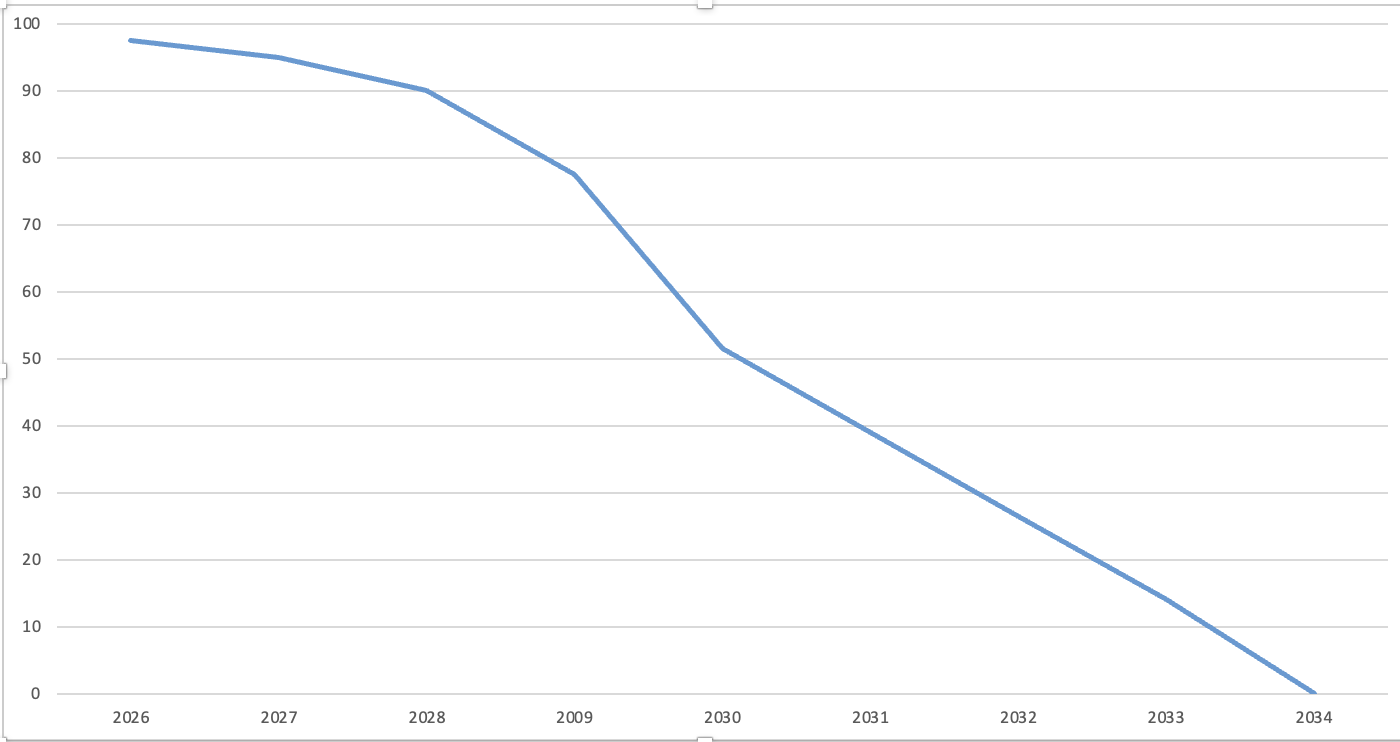
Producers in the EU receive free emission allowances in certain industrial sectors. These are meant to offset the competitive disadvantage compared with third countries. With CBAM, these free allocations are being phased out gradually. The number of CBAM certificates importers have to buy rises to the same extent. In 2026, certificates only have to be bought for about 2.5% of embedded emissions. Free allowances are set to end completely by 2034.7
Does the UK have a CBAM?
Yes, but it is a separate system. The United Kingdom is introducing its own UK CBAM from 1 January 2027, which will operate as a tax. It will cover imports into the UK in the aluminium, cement, fertiliser, hydrogen and iron and steel sectors. The first accounting period is the 2027 calendar year, with payment due at the end of May 2028.8 The EU CBAM rules in this article apply only to imports into the EU.
What can companies do now?
Those responsible in companies should check now:
- whether they import goods from third countries whose HS code falls under CBAM
- how many tonnes of CBAM goods they imported in 2026 and plan to import in 2027
- whether the goods are re-imports or imports from Switzerland, Liechtenstein, Norway or Iceland, which are exempt
- who in the company is responsible for authorisation, the CBAM declaration and buying certificates
If you are above the threshold, group your goods by country of origin and production site and ask your suppliers for verified embedded emissions values. Without supplier data, EU default values apply. Also plan the budget for certificates, which can be bought from 1 February 2027.
Up-to-date information, guidance and the authorisation procedure are available on the CBAM page of the European Commission and from the competent authority in your EU member state.roduction site, and suppliers should be asked about the calculation of grey emissions.
This article was updated on 7 October 2026.
- Regulation (EU) 2025/2083 (Omnibus simplification of the CBAM Regulation): https://eur-lex.europa.eu/legal-content/EN/TXT/PDF/?uri=OJ%3AL_202502083 ↩︎
- European Commission, CBAM definitive regime: https://taxation-customs.ec.europa.eu/carbon-border-adjustment-mechanism/cbam-definitive-regime_en ↩︎
- https://www.ffe.de/veroeffentlichungen/carbon-border-adjustment-mechanism-cbam/ ↩︎
- German Emissions Trading Authority (DEHSt), CBAM certificates: https://www.dehst.de/EN/Topics/CBAM/CBAM-definitive-regime-2026/CBAM-certificates/cbam-certificates_node.html ↩︎
- European Commission, Price of CBAM certificates: https://taxation-customs.ec.europa.eu/carbon-border-adjustment-mechanism/price-cbam-certificates_en ↩︎
- European Commission, First CBAM certificate price now available (7 April 2026): https://taxation-customs.ec.europa.eu/news/first-cbam-certificate-price-now-available-2026-04-07_en ↩︎
- Regulation (EU) 2023/956, Article 31. ↩︎
- GOV.UK, Factsheet: Carbon border adjustment mechanism: https://www.gov.uk/government/publications/factsheet-carbon-border-adjustment-mechanism-cbam/factsheet-carbon-border-adjustment-mechanism ↩︎